
EARTH CONSERVATION CORPS LEGACY
A Legacy of Service, Restoration, and Hope
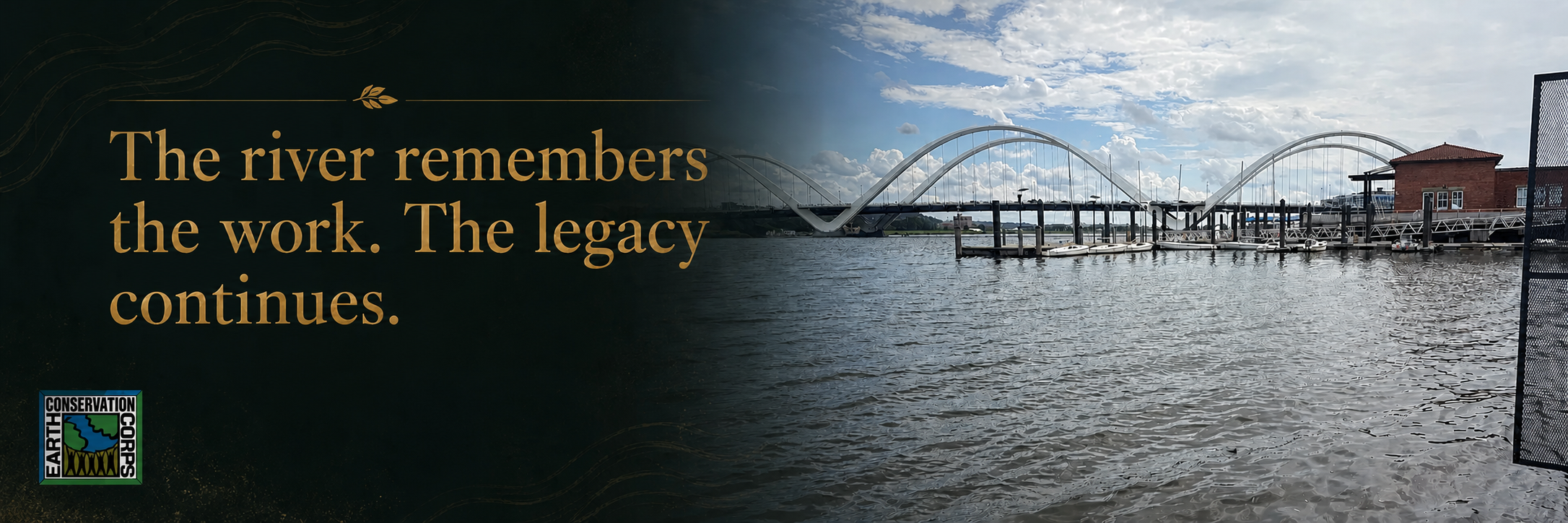
The Earth Conservation Corps brought together young people, environmental leaders, educators, volunteers, and community partners around a shared mission: restoring the Anacostia River and creating opportunities through service.
Building a Legacy
The legacy includes habitat restoration, environmental education, youth leadership, public service, and the successful return of the bald eagle to Washington, DC.
The People Behind the Work
This page recognizes the dedication of Corps members, staff, volunteers, scientists, educators, and community supporters whose collective efforts made restoration possible.
Connection to Twan's Eagle Watch Foundation
Twan's Eagle Watch Foundation is an independent organization. It preserves and documents this history through photographs, video, interviews, field notes, and educational storytelling so the legacy remains accessible to future generations.
Lessons for the Future
The Earth Conservation Corps story demonstrates that long-term commitment, community partnerships, and environmental stewardship can create lasting change.
Explore River History • Visit Eagle Watch • Discover TAM Academy • Support the Mission
The legacy of restoration belongs to everyone who helped heal the river and inspired future generations to continue the work.
Twan's Eagle Watch Foundation · Historical Exhibition
ECC Legacy
Young People. The Anacostia. An Eagle's Return.
Preserving a remarkable chapter of Washington, D.C. environmental and youth history through archival media, contemporary reporting, firsthand documentation, and living memory.
About this collection
One major gallery inside a larger story.
Earth Conservation Corps created and operated the conservation programs documented here. Twan's Eagle Watch Foundation independently preserves and interprets selected portions of that history.
This exhibition draws from firsthand documentation, archival media, historical reporting, environmental records, and living memory connected to the Anacostia River, youth conservation, bald-eagle restoration, and later educational work.
01 · Curatorial focus: approximately 1990-1994
The River Before the Eagles
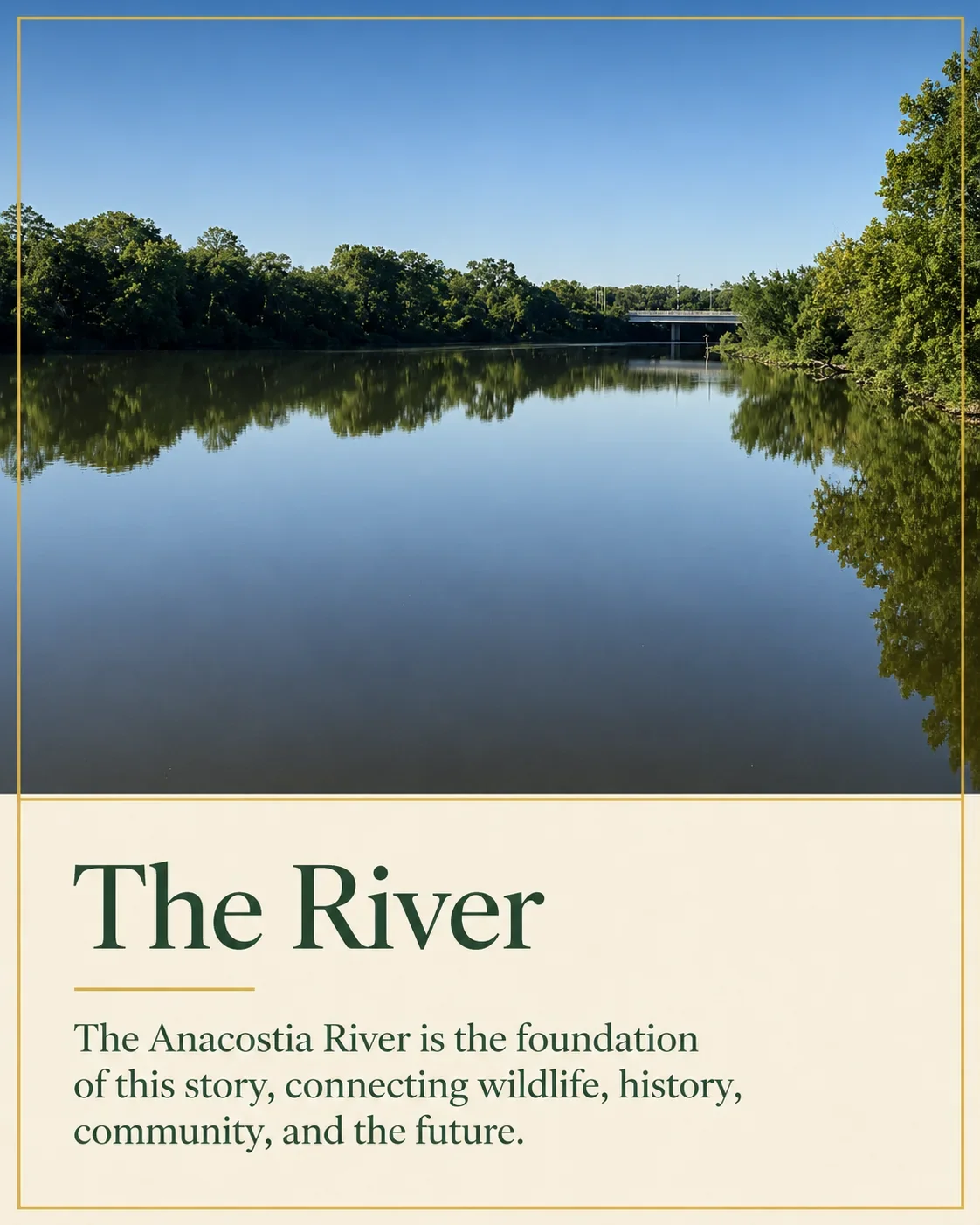
The Anacostia River and youth conservation work establish the beginning of this exhibition.
Before the eagle-restoration chapter, young people were already undertaking demanding environmental service. Contemporary records document six Corpsmembers repairing a rural trout stream for 10 days in July 1992, followed by a May 1993 Anacostia cleanup in which ECC reports that 10 volunteers removed 4,000 tires and tons of oversized trash.
Explore Before the Eagles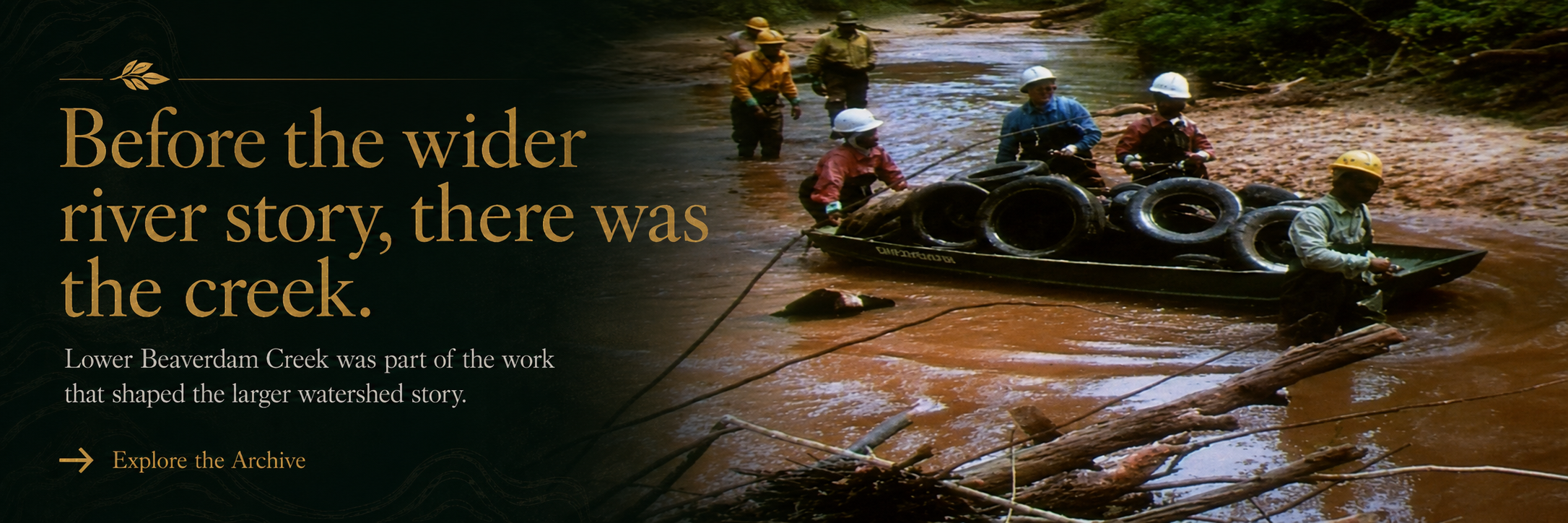
02 · Curatorial focus: 1994-1998
The Eagle Restoration Years
A major chapter connecting youth conservation, Washington, D.C., the Anacostia River, and the return of bald eagles.
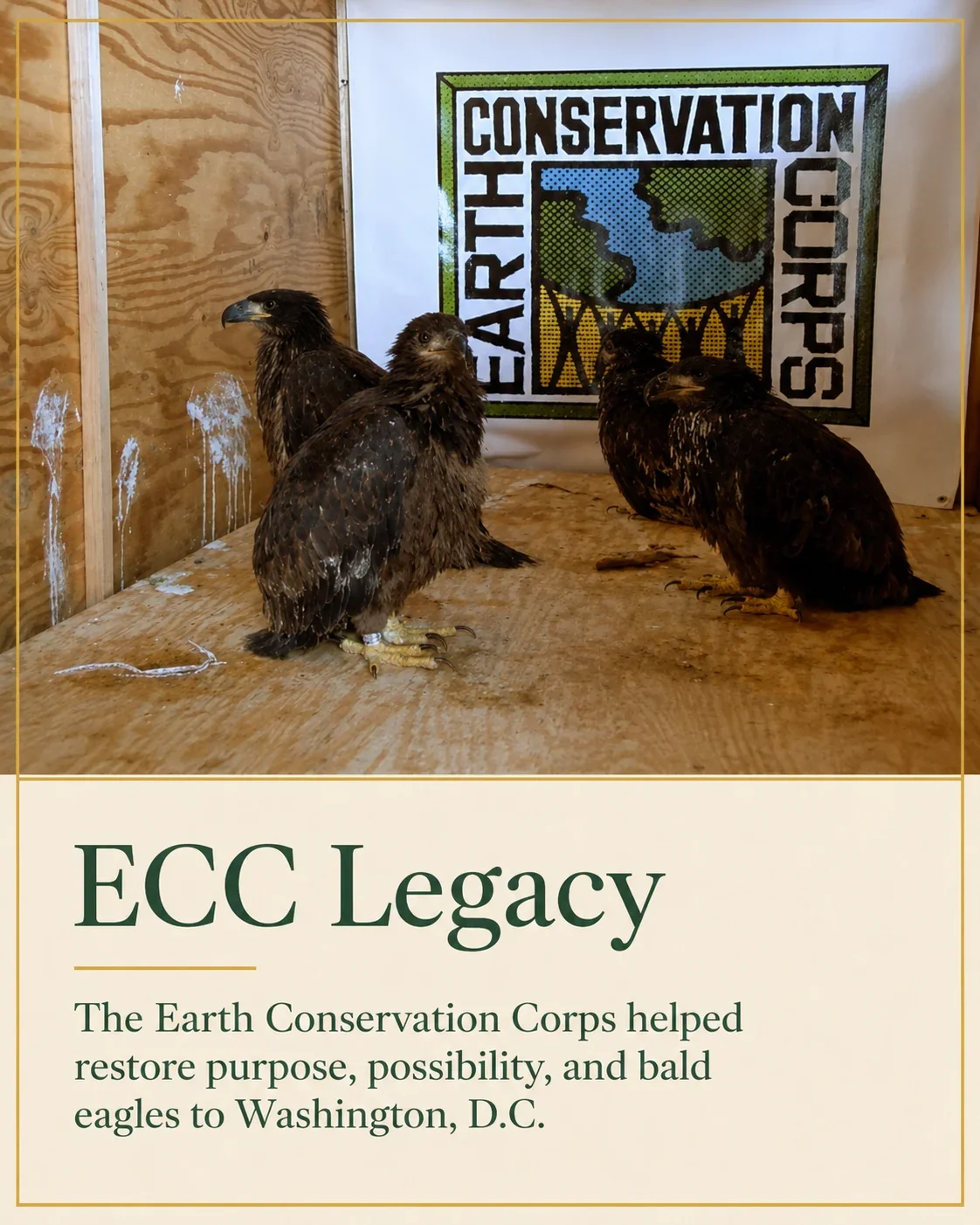
ECC states that it secured federal and state endangered-species permits in 1994 and that Corpsmembers reintroduced 16 juvenile bald eagles between 1995 and 1999. Contemporary coverage places the young birds in hacking boxes at the National Arboretum and documents Corpsmembers caring for, monitoring, and releasing them.
03 · Selected documentary evidence
The Historical Record
This is a curated record, not an attempt to reproduce every year or event. Earth Conservation Corps's How We Saved Our River collection serves as the central historical index for the linked scans below. Each card identifies the date, headline, significance, and present archival host.
Explore ECC's historical recordD.C. Members Fix Rural Trout Stream
Six Corpsmembers spent 10 days repairing structures along a creek reserved for fly fishing.
View historical sourceVolunteers Participate in Anacostia River Clean-Up
A May 19 report documents 10 volunteers, 4,000 tires, and tons of oversized trash removed from the Anacostia.
View historical sourceGoing Where Eagles Dare
Gerald Mizejewski's July 19 report documents ECC caretakers, four young bald eagles, and Twan Woods's participation at age 19.
View historical sourceOn Wings and a Prayer
D'Vera Cohn reports on four Wisconsin eaglets, the National Arboretum hacking box, and ECC caretakers and Corpsmembers.
Read Washington Post reportOn the River: Restoring Lives
John W. Fountain documents ECC's intertwined environmental and youth mission and names Corpsmembers carrying out the work.
Read Washington Post reportEndangered in Anacostia
Robert H. Nixon identifies Twan Woods as narrator and LaShauntae Moore and Darius Phillips as camera operators for the Endangered Species pilot.
Read Washington Post article04 · Preserved audiovisual history
Watch the History
Moving-image preservation is central to this archive. Each published item will carry a title, date or qualified date, location, description, source category, credit, and accessibility information.
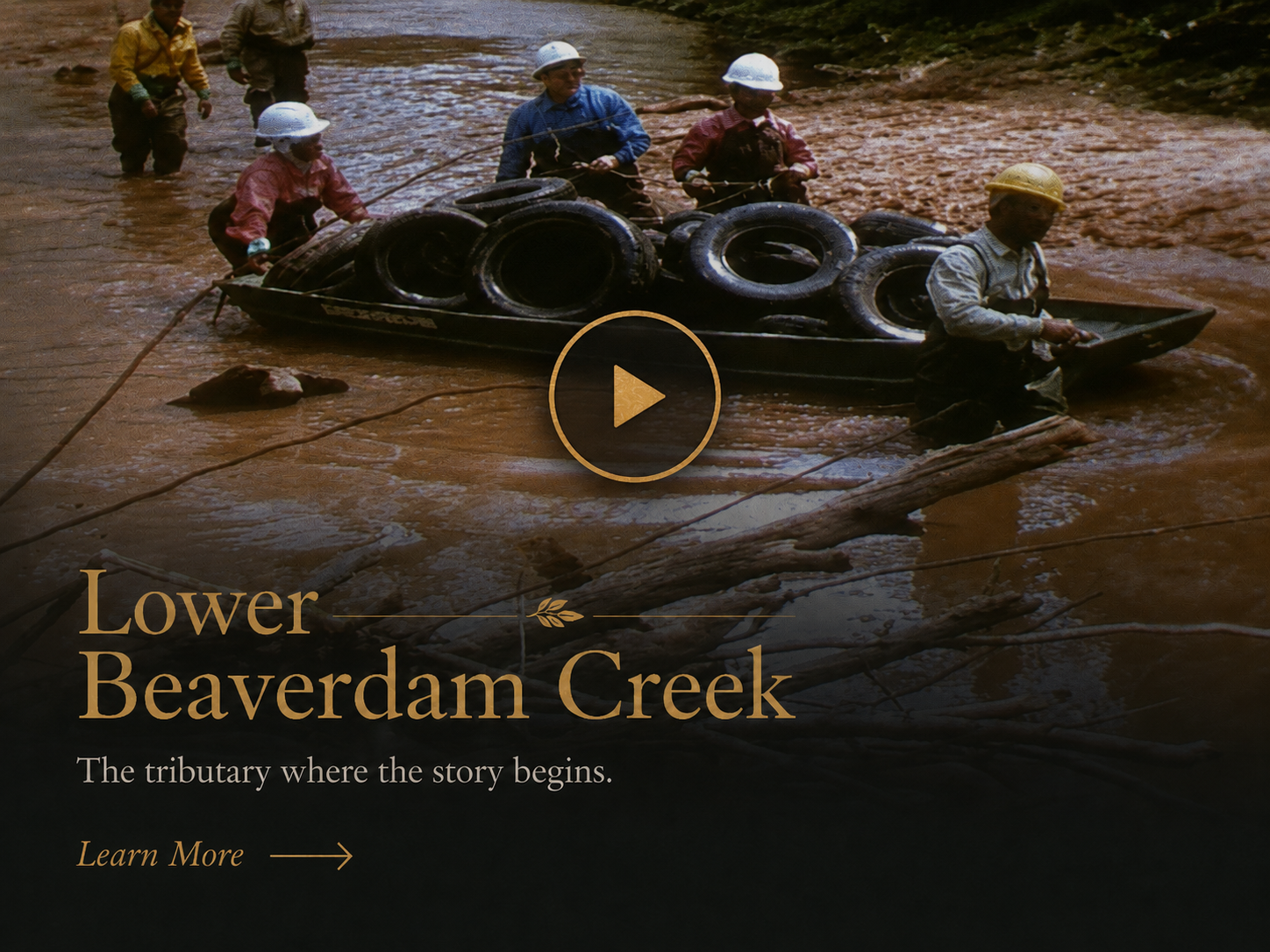
Lower Beaverdam Creek
Archive chapter connecting early Corps conservation service with the river-restoration story that preceded the eagle project.
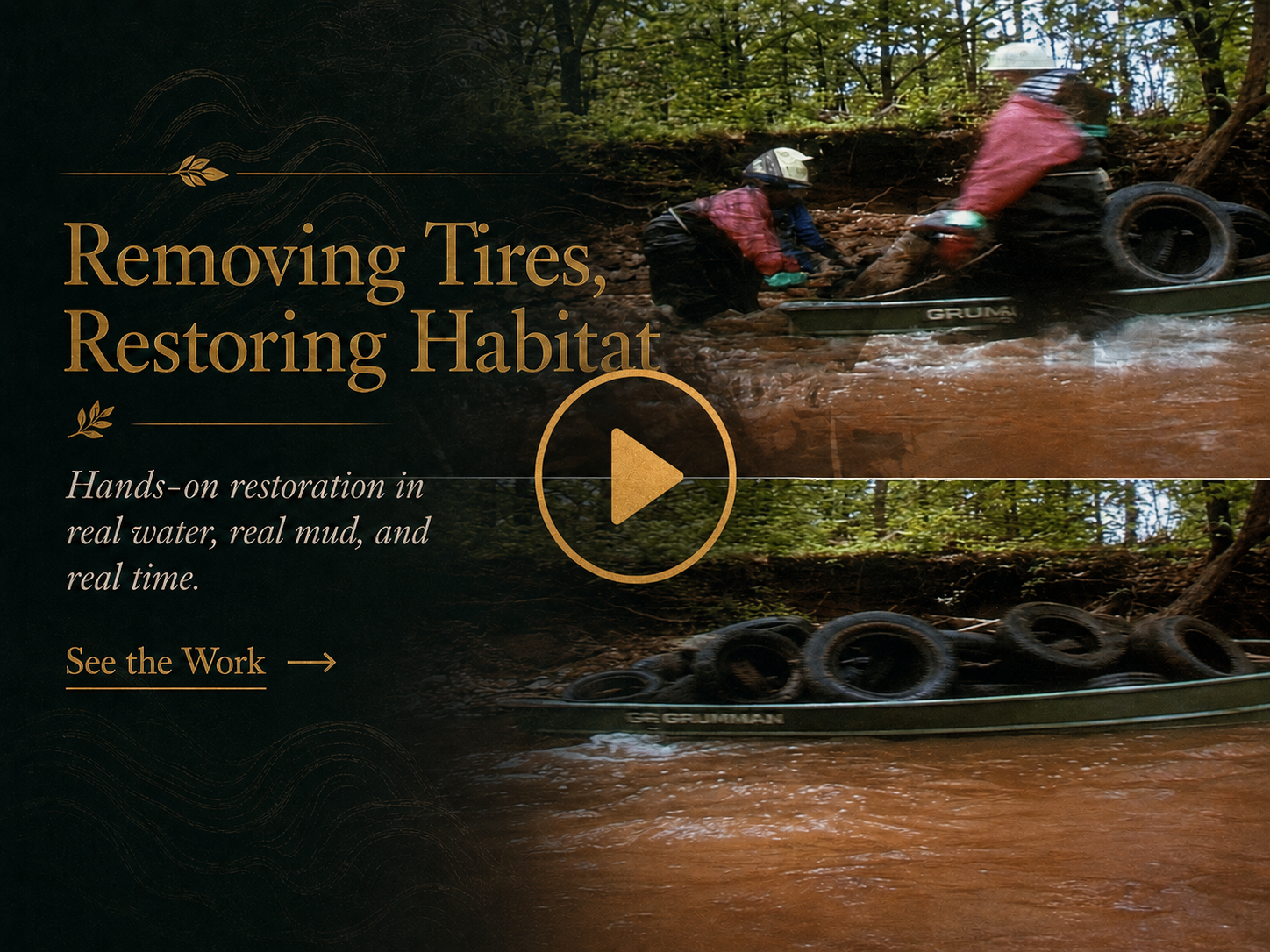
Removing Tires, Restoring Habitat
Archive chapter grounded in the documented cleanup record, including the May 1993 report of 4,000 tires removed.
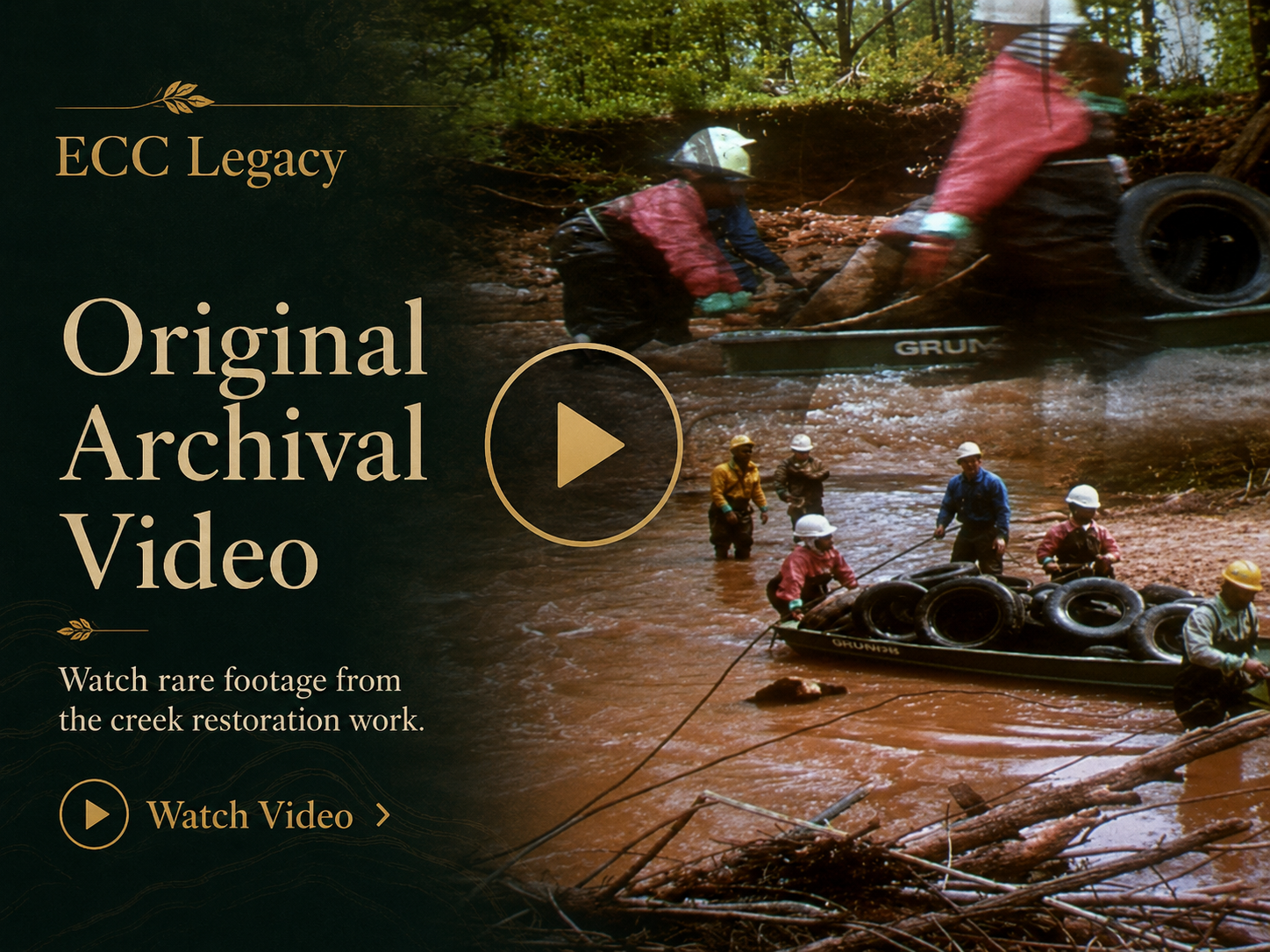
ECC Legacy Archive
Private archival presentation connecting ECC history, preserved media, and the Endangered Species documentary record. Public excerpts will retain the original film context and approved credits.
Open archival video05 · Verified names and roles
People Behind the History
The archive should never make the people who performed the work anonymous.
Contemporary reporting preserves names and roles connected to the work. This selected list is intentionally limited to people directly identified in the cited records.
Corpsmembers and caretakers
Twan Woods, Tinesha Reeves, Lamont Johnson, Roshawn Thompson, Ronnie Rice, and Donnell Whiteside are identified in reporting from 1995, 1997, and 1999.
Leadership and supervision
Robert H. Nixon is identified as ECC executive director and later president. Rodney Stotts is identified in 1999 as an ECC graduate and supervisor.
Media documentation
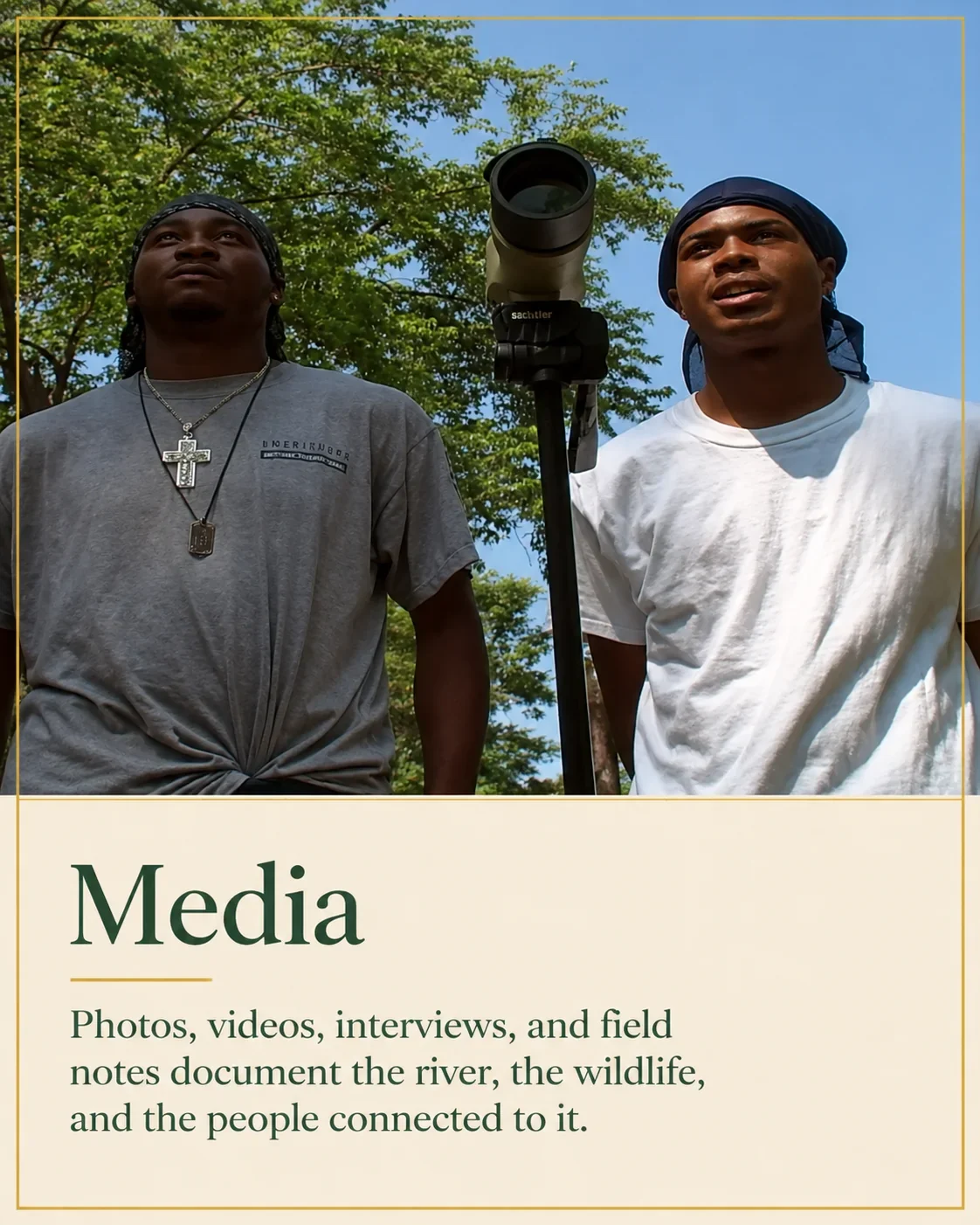
Twan Woods is identified as narrator for the Endangered Species pilot; LaShauntae Moore and Darius Phillips are identified as Corps camera operators.
06 · Firsthand documentation
From the Lived Archive
Some of the history documented here was not encountered later through research. It was lived.
Photographs, videotapes, journals, recordings, field documentation, and personal memory preserved across decades provide another layer of evidence alongside contemporary journalism and institutional records. Twan Woods participated as a young Corpsmember and later preserved archival media and firsthand records connected to the work.
07 · Context is part of the record
Why Preservation Matters
Historical records can survive while their meaning disappears.
A photograph may remain while the names are forgotten. A videotape may survive while its location, date, and purpose are lost. Preservation therefore requires more than storing files: it requires preserving people, places, dates, metadata, source history, oral memory, and interpretation.
The image is evidence. The context is what allows the evidence to speak.
08 · Independent work shaped by experience
What the History Inspired
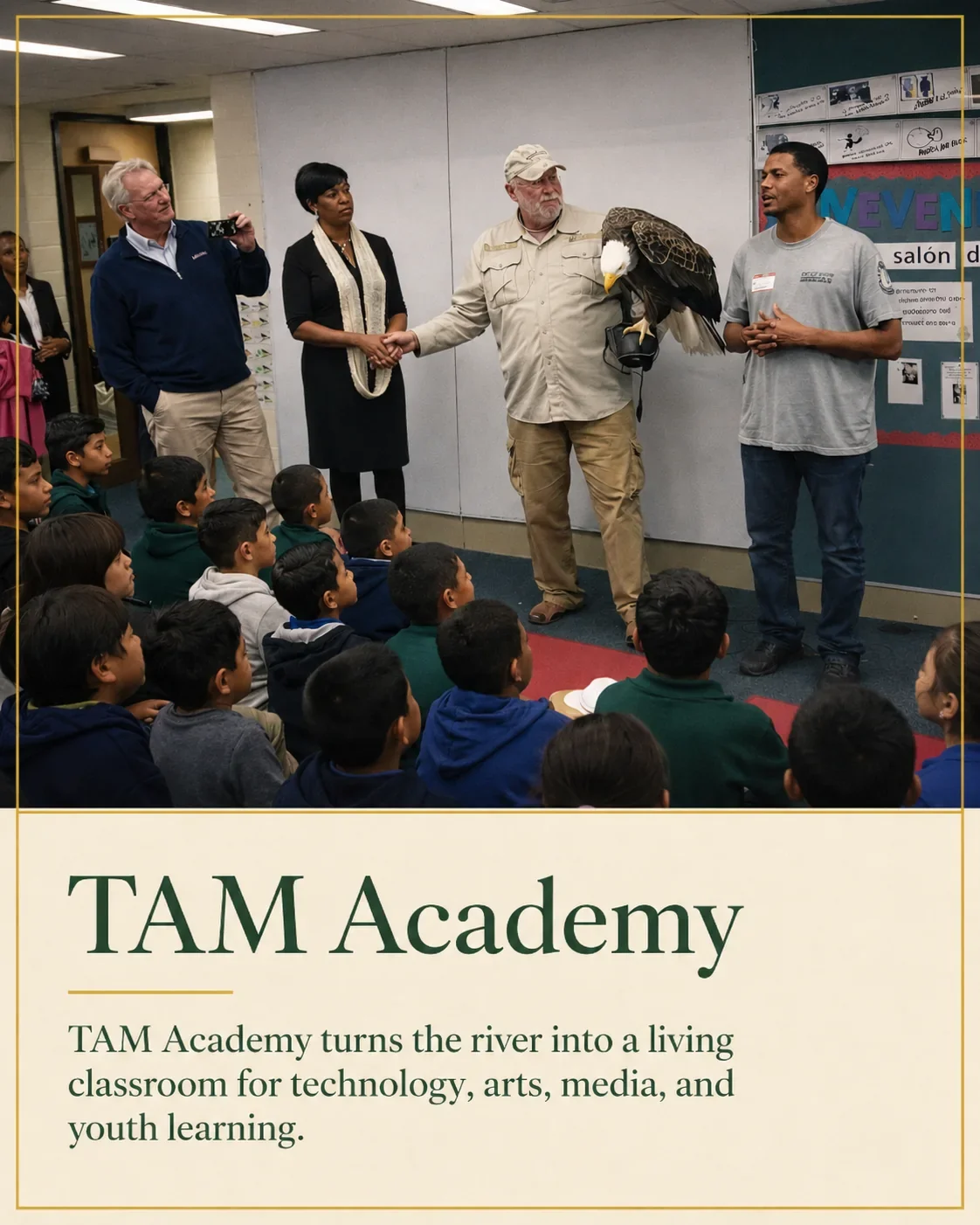
The experiences documented in this archive helped shape later work in documentary storytelling, wildlife observation, youth media, environmental education, archival preservation, and community history. Twan's Eagle Watch carries those lessons forward through its own independent mission.
Sources and acknowledgments
Transparent credit. Clear provenance.
Earth Conservation Corps played the central institutional role in the conservation programs documented throughout this exhibition. Twan's Eagle Watch Foundation gratefully acknowledges the Corpsmembers, staff, partners, volunteers, journalists, and community members whose work created and preserved this history.
- Smithsonian Anacostia Community Museum - Earth Conservation Corps
- Earth Conservation Corps - Who We Are
- Earth Conservation Corps - How We Saved Our River
- Washingtonian - later historical reporting on the crew and eagle restoration
Explore Twan's Eagle Watch
The archive returns to the river, wildlife, media, community, and future generations.
ECC created important history. Twan's Eagle Watch helps preserve one important constellation of that history while connecting it to an independent, living mission.